Category: book review

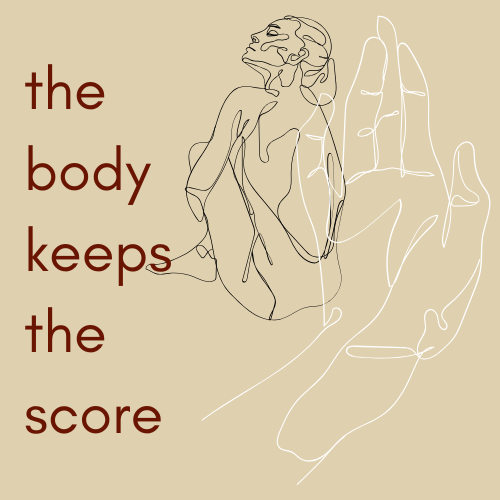
  • book review: The Body Keeps the Score by Bessel van der Kolk

    book review: The Body Keeps the Score by Bessel van der Kolk

    The Body Keeps the Score by Bessel van der Kolk emphasizes on the links between trauma, brain, memory, and the body. I picked up the book in a second-hand bookstore; I’d seen some talk of it on social media and I was curious (about both, the bookstore and the book).

    The author could’ve begun the book on a better note than stories of American veterans from the Vietnam war. I can understand why it was included; trauma in veterans is well-known, even if it was not always acknowledged as such. While the author doesn’t expect the readers to sympathize with the patients, it’s difficult to concentrate on what the author actually wants to say about the psychological aspects. The jarring admittance of war crimes made me want to drop the book. Nonetheless, I forged ahead, curious about the rest of the content and now doubly curious as to why this book is popular.

    We begin the book by looking at cases of PTSD in veterans and then in patients of varying backgrounds. PTSD was considered a formal diagnosis only in 1980 and the author goes on to illustrate that PTSD is not limited to war veterans but also applies to adults and children with history of abuse. When doctors label a patient as “difficult” or try to treat only the resulting behaviours of trauma, such as violent outbursts, engaging in dangerous activities, and anxiety and panic attacks, misdiagnosis and subsequent damage can create only more problems instead of healing the patient. The author writes how trauma reshapes brain activities, dis-regulates the nervous system, and causes other physical issues that may not seem related to the trauma. In certain cases, this can also lead to chronic illnesses. The brain and the body cannot be seen as disparate entities.

    A patient’s childhood and upbringing is a key aspect that can affect a patient’s responses to trauma. Was there something in the person’s history that made them more susceptible to reacting in a certain way? What makes one person’s trauma reaction different from another’s, even when they’ve been through the same circumstances? What were some of the major differentiating factors? Here we get into childhood experiences, family dynamics, and, inevitably, Freud.

    The book largely talks about trauma and how we can get stuck in the past, how our present is contaminated by the past, and how we can feel unsafe by mundane encounters and situations. The author stresses on creating a better relationship with ourselves, our bodies, and our past so we can be mindful about our thoughts and emotions and react to situations in a regulated manner in the present.

    From here the author describes various methods to learn how to do this, reinforcing on being engaged in our own lives, being the driver behind our own decisions. This can be done by incorporating movement and joy in our daily lives. Activities like yoga, breath-work, sport, singing, and dancing are common ways of positively occupying the mind and body. These are also very human activities and you don’t need to be a professional to include them in your life. The author also brings up several other ways, including participating in theatre, EMDR, neurofeedback, and working with animals. Patients are demonstrated to respond well to a combination of treatments including drugs, there’s no one-size solution.

    An essential part of a person’s healing journey is community. One person can only do so much on their own, and having safe and supportive relationships is integral for the person to feel more secure, to instill courage and hope for the future.

    The author uses a combination of previous research and stories of real people from his experience to draw conclusions and provide suggestions. The book is targeted at both laypeople and his peers in the field of psychology and neuroscience. Through the examples and referenced research, the author asks us to look at the root causes of harmful behaviour instead of directly handling these by talk therapy and prescribed medications. Context and nuance is important in any discourse, and the author urges us not to just work with textbook definitions, but to also look at the specific patient’s story in order to address the resulting behaviour and physical symptoms in a holistic manner.

    We cannot not include the political and economic conditions that also impact each of us. The author includes this point in the latter section of the book. Therapists must be open to learning from their patients, about their survival strategies, and how much their gender, race, and economic state play a role in them feeling safe and understood.

    There’s lot more that the author talks about in the book, and a lot of it can be boiled down to how children were treated in their formative years. Applying concepts of neuroplasticity can help to rewire the brain in later years so the adults grown from difficult childhoods can learn to live fully. However, the damage occurs on a much larger scale than one can imagine. While the author only talks about the statistics in the US, child abuse is a global issue, a lot of which is perpetrated by parents and other relations. Abuse can be physical and emotional, it can be too much attention and complete neglect, it can be small grievances piling up in a dysfunctional family. At times, schools can worsen the injury.

    The author raises valid points and the information on brain activities, the nervous system, and the consequent effects on the body was educational. I took my time reading this book, one chapter at a time, and taking notes as well. I came away knowing a little more about my self in the process. However, I’m not without complaints. Coming back to the topic of war veterans, it can be argued that this book is not about the ethics and morality of the author’s patients. I disagree. The author is clearly trying to help his patients live better lives, whatever that looks like for them. The author states the politics and people’s lives cannot be separate. The following excerpt is from the epilogue:

    When I give presentations on trauma and trauma treatment, participants sometimes ask me to leave out the politics and confine myself to talking about neuroscience and therapy. I wish I could separate trauma from politics, but as long as we continue to live in denial and treat only trauma while ignoring its origin, we are bound to fail. In today’s world, your ZIP code, even more than your genetic code, determines whether you will lead a safe and healthy life. People’s income, family structure, housing, employment, and educational opportunities affect not only their risk of developing traumatic stress but also their access to effective help to address it. Poverty, unemployment, inferior schools, social isolation, widespread availability of guns, and substandard housing all are breeding grounds for trauma. Trauma breeds further trauma; hurt people hurt other people.

    In the next paragraph, the author says the following:

    My most profound experience with healing from collective trauma was witnessing the work of the South African Truth and Reconciliation Commission, which was based on the central guiding principle of Ubuntu, a Xhosa word that denotes sharing what you have, as in “My humanity is inextricably bound up in yours.” Ubuntu recognizes that true healing is impossible without recognition of our common humanity and our common destiny.

    All well and good. So why am I bothered by the first chapter? In it, the author says: I could easily image how Tom’s (the veteran patient) rage about his friend’s death had led to the calamity that followed. It took him months of dealing with his paralyzing shame before he could tell me about it. Since time immemorial veterans, like Achilles in Homer’s Iliad, have responded to the death of their comrades with unspeakable acts of revenge. The day after the ambush Tom went into a frenzy to a neighboring village, killing children, shooting an innocent farmer, and raping a Vietnamese woman. After that it became truly impossible for him to go home again in any meaningful way. How can you face your sweetheart and tell her that you brutally raped a woman just like her, or watch your son take his first step when you are reminded of the child you murdered?

    The author asks this as a doctor about his patient and wants to say that all people involved on all sides deserve a chance at life. Both the perpetrator and the victim. I don’t think this is valid in all cases. Especially not this one. We also have to ask ourselves why this was the veteran’s idea of taking revenge? Why did his friend have to die? Because the US government sent them, and they went. Probably believing the untruths that socialism in Vietnam is somehow a threat to America. Who killed his friend then? We know who killed the Vietnamese children. War is not an inevitable side effect of humanity. These are calculated decisions taken by a few at the expense of many.

    How can you help veterans without going up against their own beliefs of war and their government’s actions? Call it radicalization if you must. Otherwise, the cycle keeps repeating with only more traumatized veterans and victims. I thought that the author would understand this since he “grew up in postwar Holland, playing in bombed-out buildings, the son of a man who had been such an outspoken opponent of the Nazis that he had been sent to an internment camp.

    It seems the author tries to walk a thin line of diplomacy. There was also no need to bring Achilles in the picture, a “great warrior and hero”. The reference doesn’t sit well in this context.

    The book also faces criticism about pseudo-scientific claims from fellow psychologists and researchers. Some readers also thought that the author tends to victim-blame. The article What the Most Famous Book About Trauma Gets Wrong quotes multiple researchers who say that the author distorted their research results.

    Having seen the critiques, I was left feeling a little deflated. I cannot say whether the claims are valid or not. I thought that a lot of the information was helpful, helping me take another look at my own behaviour, validating some of my own independent efforts to participate in my own life. Reading more books on similar topics and listening to other experts is one way to broaden my views and not consider one source as the holy grail. Nonetheless, I’d say this book is certainly informational, expanding the few ideas I had about the human psyche.

    I may be digressing a bit but I also want to mention one of the side effects of consuming too much pop-psychology content: looking at every person’s actions and choices as something to do with their trauma or their upbringing. It definitely plays a huge role in who we are, and who knows just how much of our daily lives and interactions are ruled by our subconscious mind. Introspection is well and good but too much of anything is harmful. We may find ourselves unhelpfully engaging in mental gymnastics trying to understand ourselves or someone else. This bleeds into our everyday language and can create more friction when used incorrectly, as we see with “therapy-speak”, which can propagate misinformation, further stigma, or we can end up victimizing ourselves or others. To me, it also looks like the person using such language is trying to by-pass the actual issue.

    Ultimately, it depends. There are times when understanding the various ways in which disorders can occur helps you understand other people’s motivations and sympathize with them. At the same time, it is unfair to think of people as only by-products of something that happened to them.

    Humans can be so alluring and so disheartening.

  • book review: Teixcalaan series by Arkady Martine

    book review: Teixcalaan series by Arkady Martine

    warning: this review contains spoilers.

    The Teixcalaan (pronounce it however you want) series is a 2-book series in the space science fiction genre. The genre itself is appealing to me and I couldn’t pass a chance to read this.

    This book is dedicated to anyone who has ever fallen in love with a culture that was devouring their own.

    Arkady Martine, A Memory Called Empire

    The first book starts off with the main character Mahit Dzmare, an ambassador from a space station to the hegemonic empire of Teixcalaan landing in the main city, known as the “jewel of the world”. Her predecessor has died in suspicious circumstances and the empire urgently requested a new ambassador. Mahit undergoes 3 months of training to ready herself for this post that she has dreamed of for years. Her youth has been spent in preparing for this moment. Learning the empire’s language, the culture, the literature. she’s also asked to find out what she can about what exactly happened to her predecessor, a young version of whom is now in her head.

    What was that? What do you mean by he’s in her head? So what’s going on here is that the space station that is Mahit’s home has long since developed a technology that preserves peoples’ memories using micro-chips inserted at the base of the neck. This tech is sacred to the station. The chips are passed down generations with compatible people so the memories and previous lessons are not lost. The station itself has its own culture and language and ways of living that they’ve preserved for generations, while avoiding being colonized by the empire.

    Our memory is a more perfect world than the universe; it gives life back to those who no longer exist.

    Arkady Martine, A Memory Called Empire

    Mahit has the memories of her predecessor but not the latest ones. That guy never came back to the station to store his updated memories. So Mahit feels quite lost with her memories being out-of-date by almost a decade. Who knows the kind of political climate she’s stepping into? Is she going to be in danger because of her position? She is partnered with an envoy named Three Seagrass to help her out with her new responsibilities. The empire’s naming system has two parts: a number and a noun after. Names are quite telling of someone’s position in society. When Mahit was a student, she’d think of such names for herself.

    Three Seagrass is a woman small in stature and seemingly delicate but packs a punch. She’s supposed to be smart, quick-witted, and adept in understanding and playing political games. She’s also a poet as the empire’s language is poetry. Mahit finds herself floating in the in-between. Seduced by a culture and language not her own and feeling out of place in the jewel of the world, while also not being stationer enough to now feel at-home on the station. The diaspora’s dilemma.

    And that’s the theme of these books. Underneath all the politics and scheming happening in the plot is a woman enamored by the colonizer’s tongue. Along with the political attempts are feelings of loneliness and frustration. She speaks the empire’s language fluently, she’s the ambassador for a reason. But she realizes that no matter how well she speaks the language, she could never belong there. There will always be a gap between her understanding and the exact context, connotation, and references that are natural to those of Teixcalaan, such as Three Seagrass. There’s jealousy. Mahit thought she understood the language, the words, and structure, but the people use the language in a completely different way that Mahit never thought of. She’s also feeling more lost due to the situation with her predecessor and her incomplete memories. There’s something afoot in the ministries and she’s tossed to the wolves with little preparation.

    The Empire, the world. One and the same. And if they were not yet so: make them so, for this is the right and correct will of the stars.

    Arkady Martine, A Memory Called Empire

    However, she can hold her own well enough, despite everything. And Three Seagrass turns out to be a more than an envoy for her. For the rest of the first book, we see them navigating a coup attempt and unraveling the previous ambassador’s circumstances, among other things. We learn more about the worlds as the author spins the story further.

    In the second book, the perspectives shift. It’s not only through Mahit’s eyes we see the world, but through three others: Three Seagrass, the next-in-line young emperor, and Nine Hibiscus, a captain of the space force. The world of this story expands and shifts as we encounter aliens in the form of tall beings with synced and communal memories. More than an individual and more than one whole being. They are a threat to the empire as they destroy anything within sight and are hard to grasp. Their speech makes humans feel nauseous. Somehow, Mahit and Three Seagrass now find themselves an interpreters and linguists and hope to negotiate with the aliens. I found this turn of events a bit strange. There wasn’t much in the previous story that pointed toward either of them being inclined towards translation, so it felt out of place to me.

    Talking about both books and the story as a whole, it certainly is quite fascinating to consider aliens that behave this way and how their sounds affect humans. It’s a clever piece of imagination that I never came across till now. While the major theme of the story is fascination with the colonial culture that devours all, there’s also running themes of humanity and individuals. In this context, anyone within the colonial empire is a person and others are barbarians, and will always remain so. The empire conquers others so as to bring them civilization and if it benefits the empire in the form of labor and resources, so what. Mahit’s body modifications in the form of memory implants are seen as something inhuman, barbaric as barbarians are.

    It’s interesting to look at what’s happening here. Who is Mahit? How much of it is her and how much is her predecessor? We can see it clearly enough, there is distinction between the 2 or 3 three people residing in the body of Mahit. To Three Seagrass, it’s inconceivable. For the aliens, no individual exists. But humans are individuals with different perspectives and lives, who contribute individually to the whole.

    You pump the dead full of chemicals and refuse to let anything rot—people or ideas or … or bad poetry, of which there is in fact some, even in perfectly metrical verse,” said Mahit. “Forgive me if I disagree with you on emulation. Teixcalaan is all about emulating what should already be dead.”

    “Are you Yskandr, or are you Mahit?” Three Seagrass asked, and that did seem to be the crux of it: Was she Yskandr, without him? Was there even such a thing as Mahit Dzmare, in the context of a Teixcalaanli city, a Teixcalaanli language, Teixcalaanli politics infecting her all through, like an imago she wasn’t suited for, tendrils of memory and experience growing into her like the infiltrates of some fast-growing fungus.

    Arkady Martine, A Memory Called Empire

    In the second book, Mahit and Three Seagrass have an argument that was clearly bound to happen. Mahit feels like an other and Teixcalaan and its people never fail to remark on that every time, that she’s a barbarian and cannot be trusted. Throughout the first book, she has felt lonely and yearned for a friend and she is happy to have Three Seagrass beside her. Yet, she cannot belong to the empire and, by the end of the second book, she’s exiled from her station home.

    It would be remiss not to talk about the language of the books. The Teixcalaan language is one of poetic communication in poetic forms. The author shines in many places with poems and rich analogies. However, the author also writes with interruptions in between sentences—like this with em dashes or commas or within brackets—which can be annoying at times. I’d have to go back to the beginning of the sentences to recall what was happening. This pattern was used more often than I would like and would break the flow of the story for me.

    Talking about the characters, I like Mahit well enough, but I found myself not liking Three Seagrass all that much. I can’t point to a particular reason yet, but I felt like she never really understood Mahit, or tried that hard, despite their close relationship. The characters I like best are Twelve Azalea (or Petal) and Twenty Cicada (or Swarm). I wish we could have seen more of them. Petal, gone too soon, was funny and Swarm has depth. I would have liked to see Petal more, I missed him in the second book.

    Though i have my complaints, the books are an interesting read overall. I wonder what my Teixcalaanli name would be. I can’t choose between Five Fern, Seven Sunflower, and Nine Nightshade.

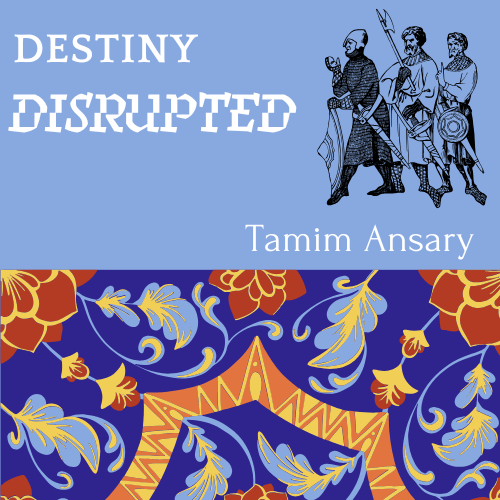
  • book review: Destiny Disrupted by Tamim Ansary

    book review: Destiny Disrupted by Tamim Ansary

    This is one book that I’ve usually seen recommended for readers interested in getting into historical fiction, or just wanting to learn about the “middle-east”. Now that I’ve read it, I see it is well-recommended for a reason.

    Tamim Ansary walks us through the world history viewed through the Islamic perspective, from the beginning of Islam to the peak of the Islamic empire to the 21st century. The stories of very real people and rulers are nothing short of fascinating. But also very sobering. The highs and lows of kings and leaders are explained briefly, but well enough to give us an understanding of hugely complex systems. It certainly couldn’t have been easy to fit everything in 500 pages.

    World history is always the story of how “we” got to the here and now, so the shape of the narrative inherently depends on who we mean by “we” and what we mean by “here and now.”

    Tamim Ansary, Destiny Disrupted: A History of the World Through Islamic Eyes

    The focal points of history we learn depend on where we live. If you go to school in America or Europe, your knowledge and perspective on history would be different than someone brought up in India or China. I, for one, wasn’t aware of the complexity and the reach of the Islamic empire, though we do learn about the Mughal dynasty in India.

    This book gives us the chance to expand our horizons, to learn about more societies and cities and influential figures whose teachings still reverberate across the world today. It’s not written like a textbook, but rather like a story that contains many branches. And the story is ongoing. In reading it like a story, you can become so absorbed, that you forget that these were real people whose actions and consequences (good or bad) we live with now.

    The US has bombed Iran, just as it helped destabilize many other countries over the course of the last few decades alone, especially, the middle-eastern nations. What is their problem? What is the their goal? People from the Jewish community also live in Iran, so do Christians. So now what’s the point? And why is Israel so entitled to a land that is not theirs? These are situations that have been a long time in the making. Products of unchecked greed and need for control.

    One point that I’ve seen many devil’s advocates raise is about industrialization and the advancements in modern science and technology. They believe that without the west, the world wouldn’t have these advancements as we do today. In this book, the author walks us through the possible reasons and counterpoints to address these arguments. There was a lot of knowledge born during those times, much before the western discoveries. Also, without the resources of the global south (a lot of it stolen), these advancements would not be possible.

    Religious extremism is seen in people of religions such as Christianity and Hinduism. But due to widespread Islamophobia and media-propagated propaganda, Muslim people are the ones that get the most amount of bad rep. They are not even seen as humans and their societies are seen as backward and barbaric. It couldn’t be further from the truth, even common sense can tell you that. Some of the most Islamophobic people are conservative, far-right religious Christian and Hindu extremists. They are the same people in different font.

    The argument between Christian and Muslim “fundamentalists” comes down to: Is there only one God or is Jesus Christ our saviour? Again, that’s not a point-counterpoint; that’s two people talking to themselves in separate rooms.

    Tamim Ansary, Destiny Disrupted: A History of the World Through Islamic Eyes

    This book also explains how Muslim people and communities themselves can hold different beliefs for the same religion and practices. It demonstrates how religion and politics haven’t really been separate for them, though there have been secular proponents, both in older history and recent history. Take, for example, emperor Akbar of the Mughal dynasty in India, who expanded his reign, was a patron of the arts, and learnt about religions, philosophy, abolished religion-based taxes. It’s just one example of one ruler of one area in one time period. There’s so much more, some of it progressive, some not.

    I cannot say that reading this book will give you all the answers, because there are none. People in power just do things. But reading it gives us an understanding, a starting point to gaze into the world with slightly learned eyes. It is never too late to change the course of history and maybe I’m simply too naive in believing that we can change things for the better this time. We can stop participating in war-mongering and divisive ways. Colonialism and capitalism cannot be decoupled, and thus, we must also stop participating in a culture that puts money above people. That means our allegiance is to each other and not to corporations. A lot of us have more privileges and influence than we realize. We’re far from being powerless.

    Like i mentioned, it’s a book for beginners, and it holds our hand as we unpack thousands of years. After reading this book, I’m inspired to learn more about the various people and cities mentioned. I think I want to read more about Baghdad and Tehran, two of the loveliest cities in the world.

    Many religions say to their followers, “The world is corrupt, but you can escape it.” Islam said to its followers, “The world is corrupt, but you can change it.”

    Tamim Ansary, Destiny Disrupted: A History of the World Through Islamic Eyes